From Service to Site / Veteran resource center

Your experience counts.
Let’s put it into words.

You have done the work. Now help a civilian employer understand it. Explore how military experience can connect to the trades—and what you may need for your next step.

For veterans, transitioning service members, National Guard and Reserve members.

Military-to-civilian skills crosswalk

Start with what you did.

Your military title is one part of your experience. The equipment you maintained, the people you led and the work you delivered help tell the rest.

Have an MOS, rating or AFSC? Use the official translator ↗

These are W2W’s illustrative career pathways, not official occupation-code equivalencies or confirmation of job qualifications. Select an area to explore; use the official translator for military-code matches.

Experience area

Communications & signals

Radios, networks, antennas and fault finding

Civilian skills to describe

Equipment setup, technical troubleshooting, test procedures, maintenance records and team communication.

Paths to explore

Telecom field technician, low-voltage technician, fiber or tower training pathways.

Your next step

Describe the systems you worked on and your hands-on responsibilities. Fiber, electrical and climbing roles may need additional training or site credentials.

Example résumé language

“Installed, tested and troubleshot communications equipment; documented faults and coordinated repairs to maintain reliable service.”

Experience area

Mechanical & equipment maintenance

Vehicles, machinery, generators and preventive maintenance

Civilian skills to describe

Diagnostics, inspection, reading technical manuals, repair documentation and safe use of tools.

Paths to explore

Equipment maintenance, field service, industrial maintenance or mechanical-trades training.

Your next step

List the equipment, tools and repairs you actually handled. HVAC, electrical and other regulated work may require separate training or licensing.

Example résumé language

“Inspected and maintained equipment, diagnosed faults using technical procedures, and documented completed repairs.”

Experience area

Construction & engineering support

Building, utilities, fabrication and equipment operation

Civilian skills to describe

Plan reading, measuring, material handling, construction methods, equipment checks and jobsite coordination.

Paths to explore

Carpentry, concrete, equipment operation, welding or electrical and plumbing apprenticeship pathways.

Your next step

Match the trade to your specific experience. Civilian licenses, equipment qualifications and employer weld tests are separate requirements where applicable.

Example résumé language

“Completed construction tasks from plans, coordinated materials and equipment, and followed worksite safety procedures.”

Experience area

Logistics & supply

Inventory, transport, scheduling and equipment accountability

Civilian skills to describe

Inventory control, material readiness, shipping and receiving, recordkeeping and schedule coordination.

Paths to explore

Construction materials coordinator, warehouse operations, logistics coordinator or project support.

Your next step

Name the systems you used and the scope you managed. Driving and equipment roles may require civilian licenses or employer authorization.

Example résumé language

“Tracked inventory, coordinated material deliveries and maintained accurate records to support scheduled operations.”

Experience area

Team leadership & operations

Leading people, planning work and keeping a mission on track

Civilian skills to describe

Work allocation, training, briefings, accountability, documentation and coordination under changing priorities.

Paths to explore

Crew-lead development, field coordination and project-support roles; supervisory paths with relevant trade experience.

Your next step

Explain team size and responsibilities. Rank alone does not establish trade proficiency or qualify someone as a foreman or project manager.

Example résumé language

“Led a team, assigned daily priorities, trained new personnel and coordinated resources to complete time-sensitive work.”

Experience area

Field operations & readiness

Work in demanding environments, inspections and team execution

Civilian skills to describe

Following procedures, checking equipment, communicating hazards, adapting to changing conditions and working as a team.

Paths to explore

Construction labor, trade-helper roles, apprenticeships and entry-level field opportunities.

Your next step

A technical military occupation is not the only starting point. Identify your interests and the training needed for the trade you want to pursue.

Example résumé language

“Prepared equipment, completed readiness checks and coordinated with teammates to execute work safely in changing field conditions.”

Résumé examples are starting points. Use only statements that accurately describe your own work, and add real details or results when available.

Military experience / Civilian possibilities

Your title is a starting point.
Your work tells the story.

Explore familiar backgrounds, then talk with us about what you actually did. These are illustrative career directions, not automatic licenses or official job equivalencies.

Navy Seabees

Your background: Builders, Construction Electricians, Utilitiesmen, Steelworkers, Equipment Operators, Construction Mechanics and Engineering Aides.

Paths to discuss: Explore carpentry and concrete, electrical, HVAC and plumbing, welding, equipment operation, maintenance or layout support according to your actual work.

Explore the source resource
Army construction & engineering

Your background: Construction backgrounds such as 12N Horizontal Construction Engineer, 12R Interior Electrician and 12K Plumber.

Paths to discuss: Discuss equipment, electrical or plumbing experience. Describe the systems you worked on and the scope of your hands-on responsibilities.

Explore the source resource
Marine Corps engineering & maintenance

Your background: Construction, equipment maintenance, utilities and related hands-on responsibilities.

Paths to discuss: Explore trade training, construction crews or mechanical work based on the tasks and equipment you know.

Explore the source resource
Air Force maintenance & civil engineering

Your background: Maintenance, electrical, mechanical and infrastructure experience.

Paths to discuss: Compare your specific systems and training with electrical, HVAC, fabrication, facilities or equipment roles.

Explore the source resource
Coast Guard technical experience

Your background: Machinery, electrical, communications and maintenance experience.

Paths to discuss: Describe inspections, repairs and equipment responsibilities when exploring mechanical, electrical or telecom paths.

Explore the source resource
Leadership, logistics & other military roles

Your background: Planning, team supervision, training, coordination and operations experience across branches.

Paths to discuss: Explore a crew role, an apprenticeship or a leadership path according to your interests and experience. Military rank alone does not establish civilian project-management qualifications.

Explore the source resource

Civilian licenses, documented experience, assessments and employer qualifications vary by role and location. Use the official military-code translator for occupation matches.
Take the next step

From Service to Site: Your Career Guide

A W2W guide to describing military experience, preparing a résumé and starting a skilled-trades career conversation.

Download the guide (PDF)
Build a civilian résumé

Translate the task.
Keep the substance.

Help an employer understand your experience without needing to know your branch's acronyms.

Example / Use only if accurate

“Maintained 80 pieces of equipment and documented inspections, repairs and readiness over a three-year assignment.”

Before you send it

  • Explain military job titles in familiar terms; describe the duties behind the title.
  • Name tools, systems, materials and equipment you used.
  • Use action verbs and support your experience with accurate results.
  • List relevant training, certifications and completion dates.
  • Describe leadership scope without assuming rank equals a civilian title.
  • Use your VMET and training records to check details and identify experience worth discussing.
Access DoDTAP / VMET
Your experience / Your next step

Turn the crosswalk
into a conversation.

The brochure is a starting point. Tell us about your military work, training and interests, and we can help you explore relevant trades and available opportunities.

Talk with W2W about your next step

Bring the experience behind your title.

Share your branch and military job code, tools and equipment you used, relevant training, location and career goals.

W2W can help you describe your experience and discuss role requirements. Credentials and licenses remain subject to the issuing organization's requirements.

NCCER credential information
Make your experience understandable

Translate the work.
Show the value.

01 / DESCRIBE

Use civilian language

Replace acronyms with the equipment, task or responsibility. Explain what you did so someone outside your branch can understand it.

02 / SUBSTANTIATE

Bring the evidence

List relevant training, credentials, tools and systems. Add accurate team sizes, workload or outcomes when you can support them.

03 / BRIDGE

Identify what comes next

Compare your experience with the role. Ask about trade training, apprenticeships, licensing and employer-specific requirements.

Recognize the work / Navy Seabees

A military title can hold
a familiar trade.

When a veteran brings construction experience, explore the projects, equipment and responsibilities behind the rating. That is where a useful hiring conversation begins.

Start with specific experience.

  • Which tasks did you perform yourself?
  • Which tools and systems can you demonstrate?
  • How did you plan work and maintain quality?
  • What civilian training or testing comes next?

Further reading: Allen Woffard's Seabee-to-trades article.

Experience areas to discuss, not automatic civilian credentials
Navy ratingRelevant work to explore
Builder (BU)Carpentry, formwork, concrete and masonry
Construction Electrician (CE)Electrical systems and power distribution
Construction Mechanic (CM)Diesel, fleet and equipment maintenance
Equipment Operator (EO)Earthwork and construction equipment
Steelworker (SW)Metal fabrication, welding and structural steel
Utilitiesman (UT)Plumbing, mechanical systems and HVAC
Engineering Aide (EA)Surveying, drafting and construction layout

Navy occupation reference: Navy construction careers. Civilian qualifications depend on documented experience, location and employer requirements.

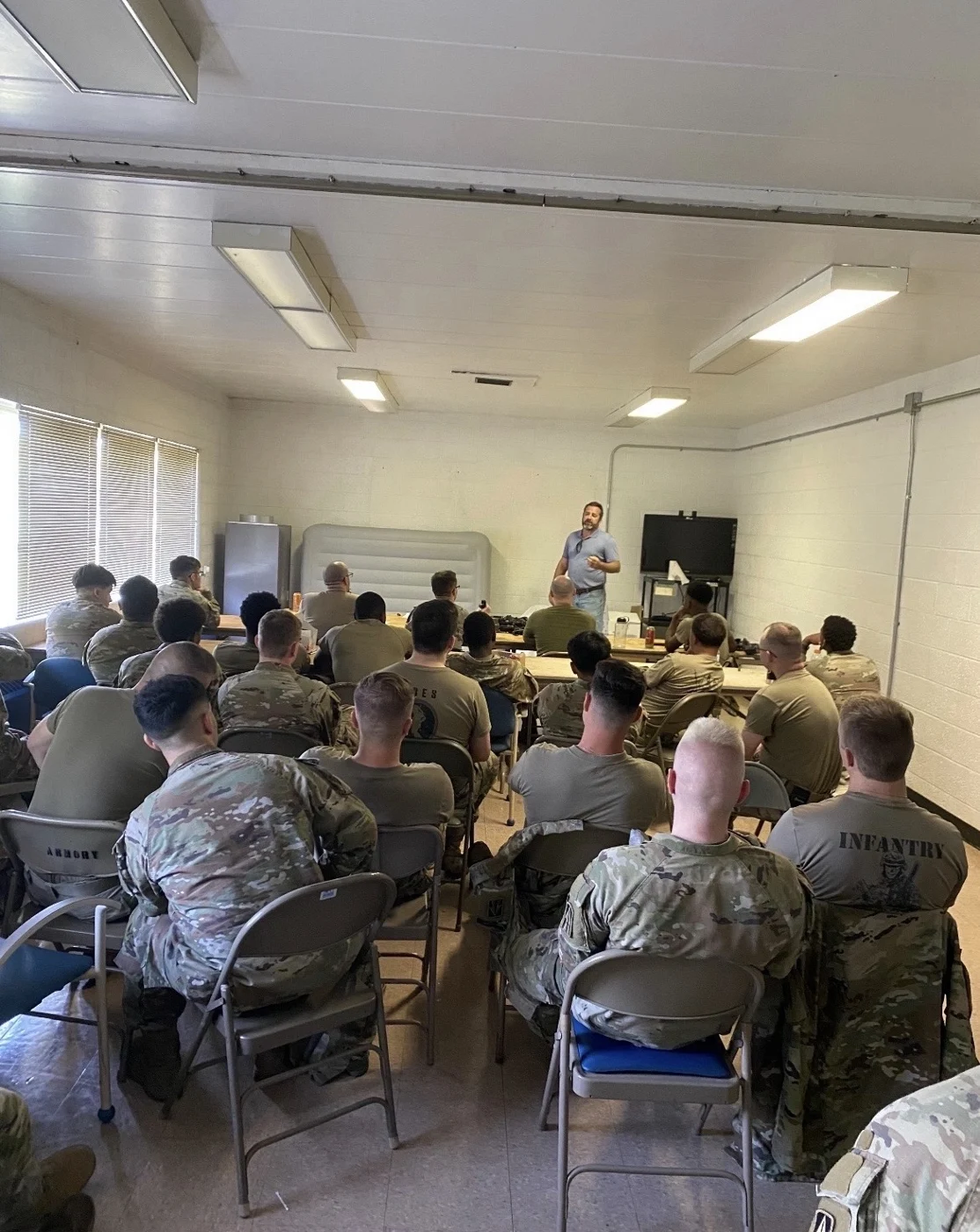
Chad Borek speaking with service members about civilian career opportunities
Chad sharing skilled-trades career pathways with Indiana National Guard members.
The mission in motion

We show up.
We start the conversation.

A military skill can open a civilian door. First, someone has to help connect the two.

Chad meets with service members to discuss construction, telecom and skilled-trades careers: what the work involves, how their experience can transfer, and what training or qualifications may come next.

See our outreach & events
Your next conversation

You don’t need to have it all figured out.

Tell us about your service, the work you enjoyed and where you want to go. We can talk through trade interests and potential opportunities.

Start a conversation with Chad

What to include

  • Your military role and hands-on responsibilities.
  • Your location, travel preferences and availability.
  • Trades you are interested in exploring.
  • Relevant training, certifications or a civilian résumé, if you have one.

A brief introduction is enough to start. Please do not email a Social Security number or sensitive service records.

External resource / NCCER & Build Your Future

Military-to-Construction Crosswalk

Explore the original Build Your Future brochure connecting military occupations with construction careers. Published by NCCER / Build Your Future; provided unchanged with its original branding.

This is an archived edition. Military codes, training and credential requirements can change. Confirm current requirements with the credential issuer or licensing authority before relying on a match.